

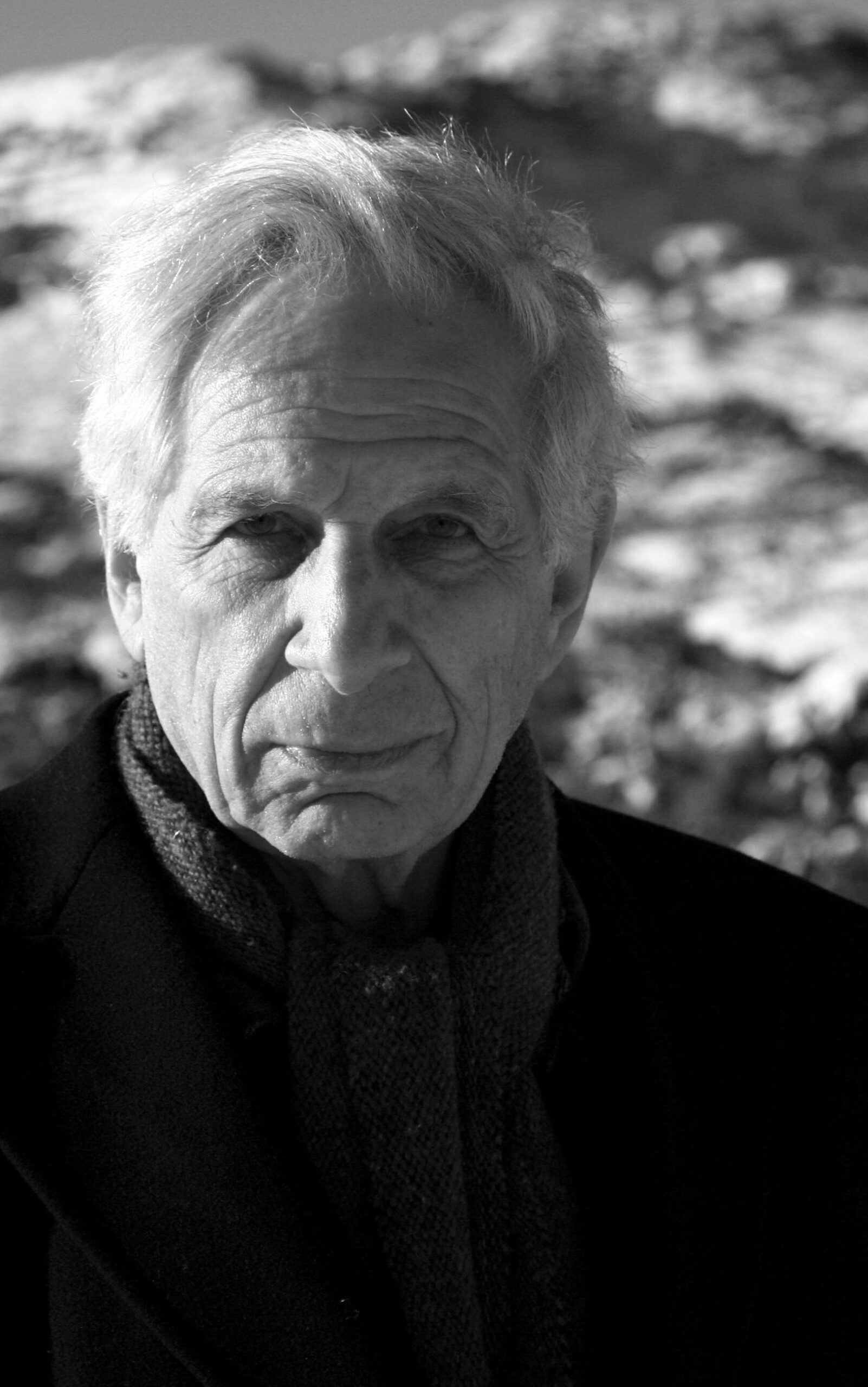
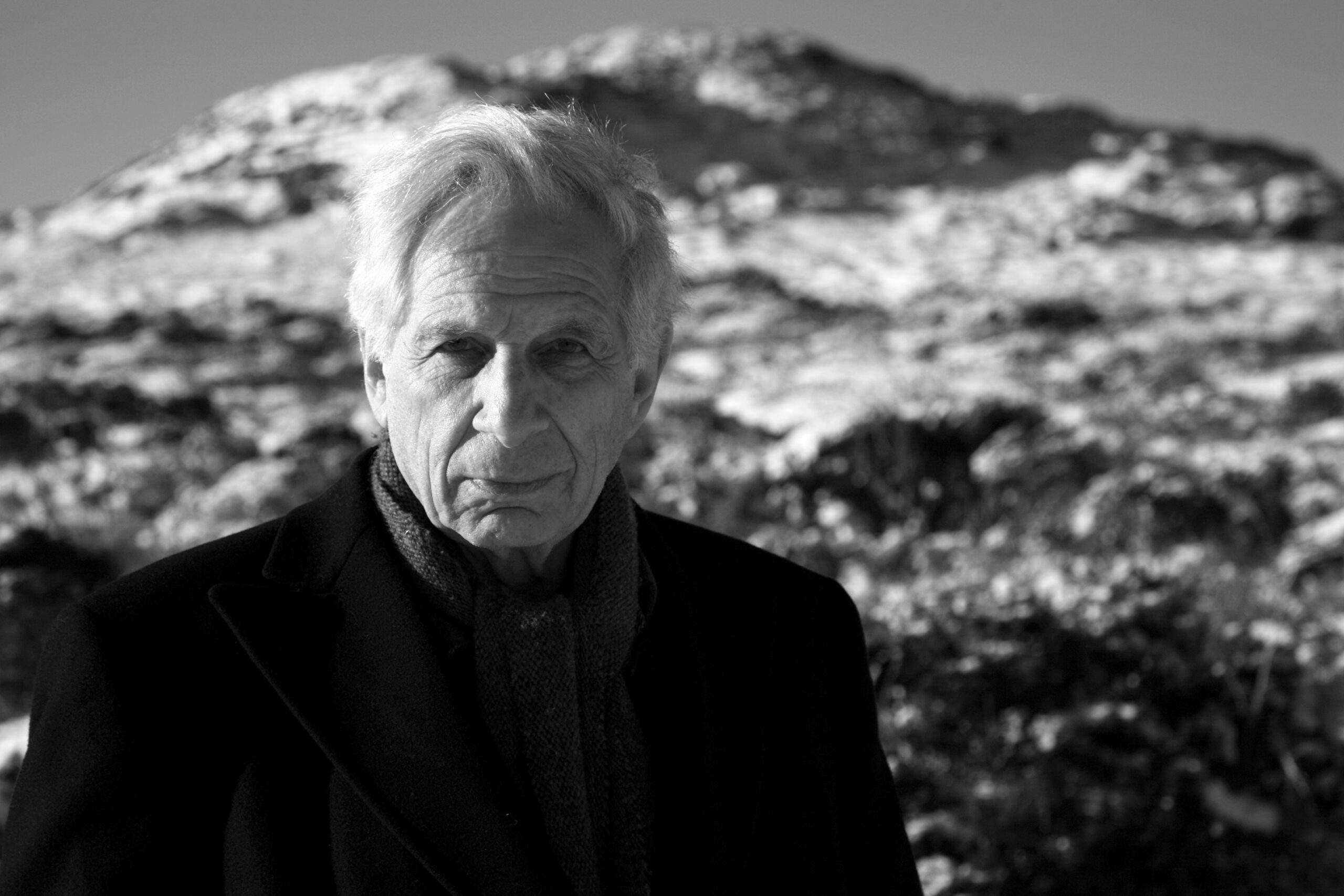
Alexander Goehr
(1932 – 2024)
composer
“The combination of mystery and transparent musical language compels attention—as did the edgy, controlled performance—even as the core meaning remained a puzzle. This was one of the best kinds of musical experiences, where one wants to hear the music repeated and get closer to the mystery at the center.”
– George Grella, New York Classical Review on Verschwindendes Wort (Vanishing Word)
BIOGRAPHY
Alexander Goehr, composer and teacher, was born in Berlin on 10 August 1932, son of the conductor Walter Goehr, and was brought to England in 1933. He studied with Richard Hall at the Royal Manchester College of Music, where together with Harrison Birtwistle, Peter Maxwell Davies and John Ogdon he formed the New Music Manchester Group, and with Olivier Messiaen and Yvonne Loriod in Paris. In the early 1960’s he worked for the BBC and formed the Music Theatre Ensemble, the first ensemble devoted to what has become an established musical form. From the late 1960’s onwards he taught at the New England Conservatory Boston, Yale, Leeds and in 1975 was appointed to the chair of the University of Cambridge, where he remained an Emeritus Professor. He also taught in China and was twice Composer-in-Residence at Tanglewood.
The year of Goehr’s appointment at Cambridge coincided with a turning point in his output, with the composition of a white-note setting of Psalm IV (1976). The simple, bright modal sonority of this piece marked a departure from post-war serialism and a commitment to a more transparent soundworld. Goehr found a way of controlling harmonic pace by fusing his own modal harmonic idiom with the long abandoned practice of figured bass, achieving a highly idiosyncratic fusion of past and present.
The output of the ensuing twenty years testifies to Goehr’s desire to use this new idiom to explore ideas and genres that were already constant features of his work, such as the exploration of symphonic form (Sinfonia (1979), Symphony with Chaconne (1985-86), Eve Dreams in Paradise (1987-88)). However, these years’ output is also characterised by a number of ambitious vocal scores. A common feature of many of the vocal compositions of these years is the choice of subjects that function as allegories for reflection upon socio-political themes: The Death of Moses (1992); the cantata Babylon the Great is Fallen (1979) and the opera Behold the Sun (1985). There are also non-political works: the cantata Sing, Ariel (1989-90), that recalls Messiaen’s stylized birdsong and sets a kaleidoscope of English poetry, and the opera Arianna (1995), written on a Rinuccini libretto for a lost opera by Monteverdi, is an exploration of the soundworld of Italian Renaissance.
Goehr’s orchestral works include four symphonies, concerti for piano, violin, viola and cello, works for chamber, string and wind orchestra, as well as ensemble. Goehr held a particularly close working relationship with Oliver Knussen, who recorded and gave premiere performances of many works including … a musical offering (J. S. B. 1985)… (1985), Idées Fixes (1997) and To These Dark Steps/The Fathers Are Watching (2011-12) for tenor, children’s choir and ensemble.
He has received numerous commissions over the years from the BBC, beginning with Hecuba’s Lament (1959-61) premiered at the 1961 BBC Proms with John Carewe conducting. Schlussgesang six pieces for viola and orchestra (1996) was premiered by BBC Symphony Orchestra at the 1997 Aldeburgh Festival with Tabea Zimmermann and When Adam Fell (2011-12) was commissioned to celebrate his 80th birthday and premiered with the BBC SO, both with Oliver Knussen conducting.
…second musical offering (GFH 2001) (2001) was a Proms commission premiered by Leonard Slatkin and BBC SO, and BBC Philharmonic and HK Gruber premiered TurmMusik/Tower Music (2009-10) in a festival of Goehr’s music in 2010. Many other world-class orchestras, soloists and conductors have performed his works: The cello concerto Romanza (1968) was written for Jacqueline du Pré and premiere at the 1968 Brighton Festival with Daniel Barenboim and the New Philharmonia Orchestra. Bernard Haitink and the London Philharmonic Orchestra premiered Metamorphosis/Dance (1973-74), Boston Symphony Orchestra premiered Colossos or Panic (1991-92) under Seiji Ozawa and Bamberg Symphony commissioned Two Sarabandes (2014) and premiered the work with Lahav Shani.
Goehr wrote five operas: Arden Must Die, Hamburg 1967; Behold the Sun, Deutsche Oper 1985; Arianna, lost opera by Monteverdi, Royal Opera House, Covent Garden, 1995; Kantan & Damask Drum, Theater Dortmund September 1999; Promised End, derived from King Lear, London 2010; and a music theatre Triptych (1968-70). Promised End (2008-9), based on Shakespeare’s King Lear was premiered in 2010 by English Touring Opera.
After productions of his opera Kantan & Damask Drum (1997-98) in Dortmund and London, Goehr devoted himself almost exclusively to chamber music. Through the chamber music medium he gained an unprecedented rhythmic and harmonic immediacy, while his music remains ever permeable by the music and imagery of other times and places. A series of quintets for different combinations includes Five Objects Darkly (1996), …around Stravinsky (2002) for violin and winds, and Since Brass nor Stone… (2008) for string quartet and percussion, a memorial to Pavel Haas which won a British Composer Award. Marching to Carcassonne (2003) for Peter Serkin and London Sinfonietta, flirts with neoclassicism and Stravinsky. The set of solo piano pieces Symmetries Disorder Reach (2007), a barely disguised baroque suite, was premiered by Huw Watkins and the trio Largo Siciliano (2012) for violin horn and piano was notably performed with pianist Daniel Barenboim. In addition, …between the lines… (2013) was premiered by the Scharoun Ensemble Berlin, Verschwindendes Wort (2014-15) was performed by Ensemble Modern, and the quintet after “The Waking” (2016-17) was commissioned by Wigmore Hall and the Santa Fe Chamber Music Festival and premiered by the Nash Ensemble. Goehr’s fifth quartet, Vision of the Soldier Er (2018), was premiered in 2019. Most recently, The Master Said (2016) was premiered by BBC National Orchestra Wales and co-commissioned with the Hong Kong Sinfonietta and Talea Ensemble gave Double Chaconne with Gaps (2019-2020) its world premiere with Susanne Blumenthal. In celebration of Goehr’s ninetieth birthday, Wigmore Hall hosted a portrait concert of the composer featuring the premiere of Combat of Joseph de la Reina and the Devil (2019-2020) and Cambridge University New Music Group in collaboration with the Britten Sinfonia curated a concert entitled ‘Alexander Goehr: A Retrospective’.
Alexander Goehr was an honorary member of the American Academy of Arts and Letters, a former Churchill Fellow, and in 1997 gave the BBC Reith Lecture. In 2019, Goehr was made an Honorary Member of the Royal Philharmonic Society in recognition of his lifelong contribution to musical culture. He was an Emeritus Professor at Cambridge University, and his manuscript archive is curated by the Berlin Akademie der Künste. In December 2022, he was most recently awarded the Ivor Novello award for Outstanding Works Collection.
The collaborative book Composing a Life by Goehr and composer-musicologist and former pupil Jack Van Zandt was published by Carcanet in October 2023. One of Goehr’s final work, Onedering (2023) for string quartet was premiered by the Villiers Quartet at the Royal Northern College of Music to mark the occasion.
Much of Goehr’s music is available on the NMC label, including the discs ‘Colossos or Panic’ (2012), ‘Since Brass, nor Stone’ (2003), and ‘Piano Concerto – Symphony in One Movement’ (1995), and a portrait disc of his orchestral music has been released by Naxos. Collections of his writings can be found in ‘Finding the Key’ (Faber & Faber 1998), and in ‘Fings ain’t wot they used t’be’ (Berlin Akademie der Künste and Wolke-Archive 2012).
The world premiere of Goehr’s Seven Laments for solo clarinet performed by Ib Hausmann will be part of Langenselbolder Klassik-Festival in October 2024 and Ensemble 10:10 conducted by Geoffrey Paterson will perform Sinfonia (1979) in Liverpool in March 2025.
Sandy (to all who knew him) passed away on 26 August 2024 at home in Cambridgeshire.
July 2026
Alexander Goehr is represented worldwide by LoganArts Management Ltd.
For more information, please contact :
Andrew Logan, Director
+44 (0) 7841 582 851 | info@loganartsmanagement.com
More also at https://www.schott-music.com
ALEXANDER GOEHR – CATALOGUE OF WORKS
Alexander Goehr is published by Schott Music
More also at https://www.schott-music.com
Stage Works
Chamber Opera
Naboth’s VineyardDramatic madrigal with a text in Latin and English adapted from I Kings XXI
ShadowplayPart II from Music Theatre Triptych
Opera
Arden Must Die – Arden muss sterbenan opera on the death of the wealthy Arden of Faversham in two acts (seven scenes)
Arianna(lost opera by Claudio Monteverdi)
Behold the Sun – Die Wiedertäufer (Sehet die Sonne)opera in three acts
Damask Drumfollowed by a folkplay (Kyogen)
Kantantext by the composer after Zeami
Kantan and Damask DrumJapanese Opera
Music Theatre Triptych
Promised EndOpera to words from Shakespeare’s King Lear
Sonata about JerusalemCantata with texts adapted from the autobiography of Obadiah the Proselyte and the chronicle of Samuel ben Yahya ben al Maghribi (12th century)
Orchestra
… second musical offering (GFH 2001)for orchestra
Adagio (Autoporträt)for orchestra
Colossos or PanicSymphonic Fragment after Goya
Deux Étudesfor orchestra
Fantasiafor orchestra
Hecuba’s Lamentfor orchestra
Metamorphosis/Dancefor orchestra
Overturefor ensembleScore
Overture with Handelian Airfrom ‘… second musical offering (GFH 2001)’
Pastoralsfor orchestra
Symphony in One Movementfor orchestra
Symphony with Chaconnefor orchestra
Two Sarabandsfor orchestra
When Adam Fell / Durch Adams Fallfor orchestra
Chamber Orchestra – Ensemble
… a musical offering (J. S. B. 1985)…for fourteen players
… between the lines / … zwischen den ZeilenChamber symphony for eleven players
‘…kein Gedanke, nur ruhiger Schlaf’(in memoriam Olivier Messiaen)
2 notes only for Ollie…for eleven players
Concerto for Eleven
Double Chaconne with Gapsfor ensemble
Idées fixesSonata for 13
Little Symphonyfor small orchestra
Naboth’s Vineyard – Naboths WeinbergSzenisches Material auf einen lat./engl. Text aus dem 1. Buch der Könige, Kap. 21
Overturefor ensembleScore
Sinfoniafor chamber orchestra
Sinfonia
Still Landsthree pieces for small orchestra
The DelugeCantata for soprano, contralto and instrumental ensemble
String Orchestra – String Ensemble
Fugue on the notes of the Fourth Psalm
Little Music for Strings
Romanza on the notes of Psalm 4
TurmMusik / Tower Musicfor two clarinets, brass and strings with baritone solo
Wind Orchestra – Wind Ensemble
Chaconne for Wind
Lyric Piecesfor wind instruments with double bass
Three Pieces from ‘Arden Must Die’for wind band, harp and percussion
Variations on Bach’s Sarabande from the English Suite in E minorfor wind instruments and timpani
Solo Instruments with Orchestra or Ensemble
Piano
Concertofor piano and orchestra
Konzertstückfor piano and small orchestra
Marching to CarcassonneSerenade for piano and 12 instruments
Marching to CarcassonneSerenade for piano and chamber orchestra
Violin
Concertofor violin and orchestra
Viola
Schlussgesangsix pieces for viola and orchestra
Violoncello
Romanzafor cello and orchestra
Uninterrupted Movementfor solo cello, 4 celli and others
2 and more Solo Instruments
Broken Lutefor alto flute, oboe and strings
Cambridge Hocketfor four horns and orchestra
Romanzaon the Notes of the Fourth Psalm
Romanza on the notes of Psalm 4
Chamber Music
…around Stravinskyfor violin and wind quartet
Ariel, Singfor solo flute
Broken Lutesix pieces for solo violin
Composition of A’s and G’sfor soprano saxophone
Duosfor two violins
Fantasias
Fantasiefor cello and piano
Hymn to Nightfor viola with piano accompaniment
Idées fixesSonata for 13
Largo SicilianoTrio for violin, horn and piano
Lyric Pieces
manereduo for clarinet and violinDouble score edition (parts for both clarinet and violin)
Paraphrase on the Dramatic Madrigal ‘Il Clorinda’ by Cl. MonteverdiCombattimento di Tancredi e Clorinda
Piano Quintet
Piano Trio No. 1
Piano Trio No. 2Nightown
Prelude and Fuguefor 3 clarinets
Quintet ‘Five Objects Darkly’for bass clarinet, horn, violin, viola and piano
Quintet for clarinet and strings
Seven Lamentsfor clarinet in A
Since Brass, nor Stone…fantasy for string quartet and percussion
Sonatafor cello and piano
String Quartet No. 2
String Quartet No. 3
String Quartet No. 4‘In memoriam John Ogdon’
Suitefor flute, clarinet, horn, violin/viola, cello and harp
Suite
Suitefor flute, clarinet, horn, violin/viola, cello and harp
Sur terre, en l’airThree Pieces
Surrounding Silencesfor piano
Three Pieces from ‘Arden Must Die’
Uninterrupted Movement
Variationsfor flute and piano
VirtutesA cycle of nine songs and melodramas
Vision of the Soldier Er(String Quartet No. 5)
Keyboard Instruments
Piano
Piano solo
…in real timeCycle of pieces for solo piano
3 Piecesfor piano
Capriccio
Nonomiyafor piano
Sonatafor piano
Symmetry Disorders Reach15 Pieces
Variations(Homage to Haydn)
Two and more pianos
VirtutesA cycle of nine songs and melodramasScore
Organ
Organ solo
Chaconne
Organ and voice
VirtutesA cycle of nine songs and melodramas
Vocal Music
Choral music
Mixed Choir
Broken PsalmChoral score
Carol for St. Stevenfor SATB choir
Cori di Pescatorifrom the opera ‘Arianna’
Five Poems and An Epigram of William Blake
Imitations of Baudelairefor mixed chorus a cappella
2 Choruses
VirtutesA cycle of nine songs and melodramas
Women’s / Children’s Choir
Psalm IVScore
The Death of Mosesfor 5 soloists (SATBarB), mixed chorus, children’s chorus and thirteen instruments
To These Dark Steps / The Fathers are Watchingfor tenor, children’s choir and ensemble
Triptych3 Sonata about Jerusalem
VirtutesA cycle of nine songs and melodramas
Symphonic vocal works
Speaker with Orchestra or Ensemble
The Master Saidfor speaker and chamber orchestra
Solo Voice with Orchestra or Instruments
Behold the SunConcert aria with refrain for high soprano, vibraphone obligato and chamber orchestra
Four Songs from the Japanesefor mezzo-soprano and orchestra
from Shadow of Nightfor countertenor and viol consort
Lamento of ‘Arianna’based on the composition of the same name by Claudio Monteverdi
TurmMusik / Tower Musicfor two clarinets, brass and strings with baritone solo
Several Solo Voices with Orchestra or Instruments
Eve dreams in Paradisefor mezzo-soprano, tenor & orchestra
Sing, Arielfor solo mezzo-soprano, two sopranos and five instrumentalists
The DelugeCantata after Leonardo da Vinci
Vanishing Wordfor mezzo-soprano, tenor and ensemble
Choir with Orchestra or Instruments
Babylon the Great is Fallenfor mixed chorus and orchestra
Psalm 39‘I said, I will take heed’
Solo Voices, Choir and Orchestra or Instruments
The Death of Mosesfor 5 soloists (SATBarB), mixed chorus, children’s chorus and thirteen instruments
To These Dark Steps / The Fathers are Watchingfor tenor, children’s choir and ensemble
Voice and Keyboard Instrument
Dark Days
In Theresienstadtfor mezzo soprano and piano
Pomfret. The Dungeon of the Castle.Enter King Richard.
Warngedichteeight songs on poems by Erich Fried
Voice(s) and one other Instrument
Arianna Abbandonatafrom scene 3 of ‘Arianna’ with guitar interludes
Voice(s) and Chamber Ensemble (2-12 instruments)
The DelugeCantata for soprano, contralto and instrumental ensemble
Three Songsfor voice, clarinet in A and viola
Three Sonnets and Two Fantasiasfor counter-tenor and viol consort
Speaker with Instrument or Chamber Ensemble
The Master Saidfor speaker and chamber orchestra
VirtutesA Cycle of nine songs and melodramas
info@loganartsmanagement.com | +44 (0) 7841 582 851